
Community
San Antonio takes another look at police’s ICE policy, following Austin and Houston
By Monica Ramirez
Advertisement · Why this ad?
Monica Ramirez has over 15 years of experience in journalism, holding positions at the San Antonio Express-News and Texas Public Radio. She graduated from the University of Texas at Austin with a degree in Journalism and has a passion for uncovering community stories that often go untold.
More from Monica →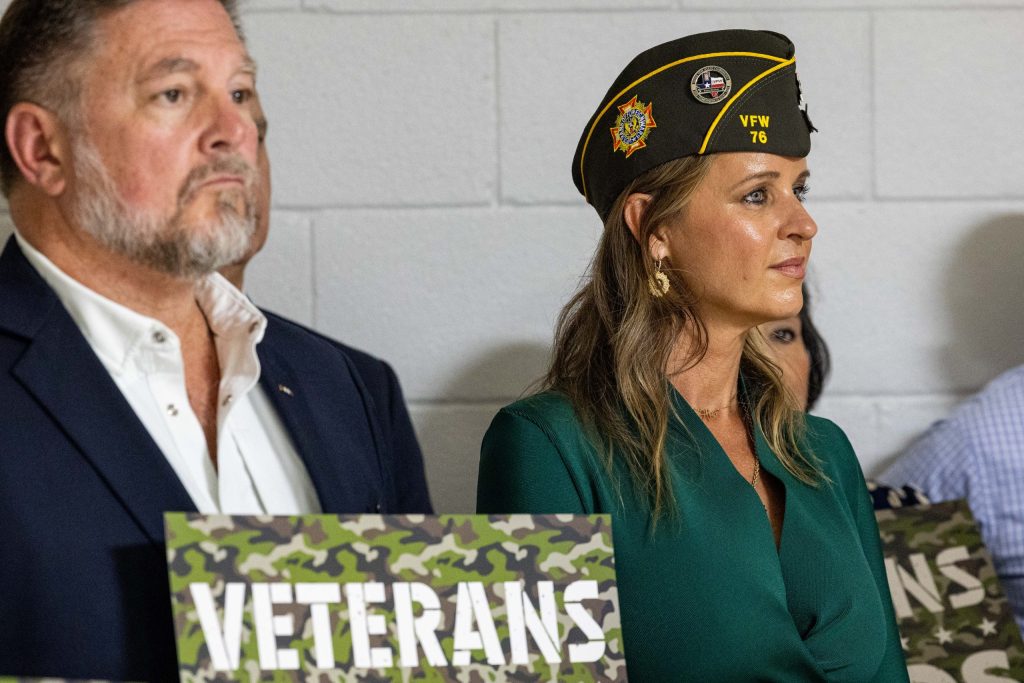
Clinging to the final days of their majority in the U.S. House of Representatives, Republicans were finally successful in passing the divisive Take Care of America’s Veterans Act. The massive veterans benefits bill has torn up the veterans community, pitting the two largest veteran service organizations, the VFW and the American Legion, against each other since it was introduced in June. The mega-bill combines 62 pieces of veteran-aiding legislation that brings about a long-wanted change allowing concurrent retirement and disability pay for qualified vets, but it comes at a steep price for some: Adjustments to the disability ratings for sleep apnea and tinnitus. The bill passed Wednesday on a voice vote, meaning that no individual lawmakers votes were recorded. The bill will still need to pass through the U.S. Senate, which remains in Republican control until January. The vote for the bill came after VFW members from across the country, more than 200 in total, had been lobbying in Washington D.C. against the bill all week, flying out just hours before the bill was brought to a vote. Among them was San Antonio VFW Post 76 Vice Commander Janae Sergio. “It seems like they put it on the floor today because they knew we were all leaving and everybody would be distracted with Veterans Day,” she said. “It was slimy as f*ck.” The bill was so controversial that when it was originally scheduled for a vote this summer, it was pulled at the last minute. With such a slim majority, Republicans needed nearly unanimous support. A voice vote involves the room of representatives calling out their “yea” or “nay” votes and then the chair determines which side has more support. “That was indicative of the fact that they knew that it would not pass an actual vote,” Sergio said. “They wanted to make sure that it wasn’t a recorded vote, so that none of them could be held accountable for doing a benefits grab on Veterans Day.” The top Democrat on the Veterans’ Affairs Committee, U.S. Rep. Mark Takano of California, told POLITICO he was engaged in a conversation about changes to the bill when the vote was called, saying the move to call a voice vote was “treachery and trickery of the majority.” “While these negotiations are going, they rammed through this vote,” Takano said. When U.S. House Speaker Mike Johnson visited San Antonio in August for a campaign event he told a group of veterans, “This is a serious issue …this provision was put in, and I don’t think it was fully understood by all the members of the body when it came.” “We have to resolve it first, and we’ll see how that goes,” Johnson said at the time. “There’s a lot more discussion and analysis that is going into it.” The Republican-led bill had stalled in Congress, largely over the funding provision. In order to pay for the benefits legislation within the bill, Congress included a provision that would change the disability rating going forward for tinnitus and sleep apnea, two of the most commonly filed VA disabilities. The American Legion and supporters of the bill believe passing this legislation, is worth the change to the rating system. The VFW’s side argues that the bill takes benefits away from one group of veterans and gives them to another. They would prefer that the long sought-after concurrent retirement and disability pay be voted on as a separate bill, the Major Richard Star Act. As things stand, veterans who were forced to medically retire early due to combat-related injuries have their Defense Department retirement pay decreased by the amount of VA disability compensation they receive. Democrats were unified in opposition to the bill as it was written, largely due to the funding provision, but many have voiced support for the Major Richard Star Act, which would increase retirement payouts for more than 50,000 combat-injured veterans. A discharge petition to vote on the Major Richard Star Act advanced this week, part of why Sergio thinks this veteran’s megabill vote was acted on so quickly. The Major Richard Star Act is expected to be voted on in the House on Thursday . Fears that the VA was going to move ahead with lowering ratings for sleep apnea and tinnitus anyway, which it has attempted to lower before in order to cut costs, is an argument that some veterans have used for supporting the bill. They say they would rather see the money saved from this change go directly toward veteran benefits, as it does in the bill. Sergio said she and a large group of local veterans spoke with Texas representatives in the U.S. House and Senate. Their hope is that the bill will die in the Senate, and that the standalone Major Richard Star Act can move forward. She said Sen. Ted Cruz’s office acknowledged that “there are potholes in this bill,” but did not commit to voting one way or another. The San Antonio Report’s military and veterans coverage is supported by Report for America. More from San Antonio Report On Veterans Day, House pushes through massive and controversial veterans bill by Eleanor Fitzgerald San Antonio takes another look at police’s ICE policy, following Austin and Houston by Diego Medel When will incoming Texas Gov. Gina Hinojosa take office? by Andrea Drusch
By Monica Ramirez

By Lily Nguyen

By Monica Ramirez

By Monica Ramirez