
Schools
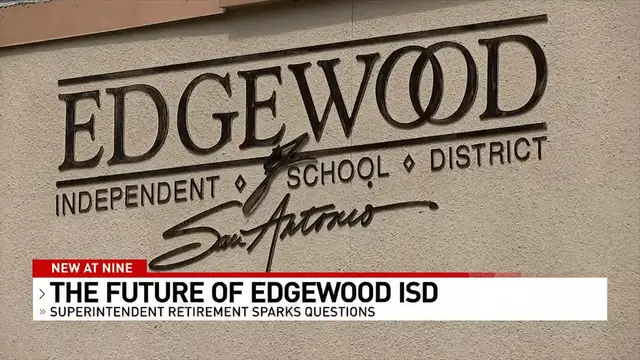
Edgewood ISD superintendent retires before new school board members take office
By Eric Lopez
Advertisement · Why this ad?
A former collegiate athlete, Isabella graduated from Texas State University with a degree in Sports Management and has covered high school sports for the San Antonio Express-News for five years. Her unique insight into the local sports culture allows her to connect with fans and players alike.
More from Isabella →
Prayer brought Eduardo Hernandez to lead Edgewood Independent School District in 2018. Now “prayer is taking me away,” he said. For nearly nine years, Hernandez has served as superintendent of the small Westside school district, longer than he or the school board that originally hired him anticipated. His decision to retire comes earlier than expected. Last year, the board extended Hernandez’s contract to June of 2030, which was extended again in September to 2031. The announcement also comes a week after the November midterm elections shook up the Edgewood’s school board’s composition . At 52, Hernandez is hardly considered retirement age, but he’s the oldest of five and his parents are of a “certain age.” After praying on it, he said he knew it was time to step down for now, but will likely reemerge in public education or a nonprofit later. A man who often talks about his faith, Hernandez has described working in education as his “life’s ministry.” He came to San Antonio from the Dallas area, arriving two years into a state takeover of Edgewood ISD , a school district Hernandez described as similar to where he grew up in East Dallas. Under Hernandez, Edgewood eventually transitioned back to local control and was an early adopter of school choice strategies and programs like the Teacher Incentive Allotment program, which pays teachers thousands more based on effectiveness and school need. He also launched and personally funded a scholarship to help the district’s top graduates cover the “incidentals” of college life, like dorm supplies, books and even attire — something he struggle with as a first-generation college student. That scholarship will likely end now, Hernandez said. When he first got to Edgewood, all of its schools had failing academic ratings from the state. Now, most are passing, but the district has gotten an overall D rating several years in a row, a fact Hernandez has been publicly criticized for by several parents and community members, including the newly-elected board members who are set to sworn in next week. Hernandez said he plans to be at that meeting where the board will likely name an interim leader and will support the transition until his last day in February. This interview has been lightly edited for clarity and length . When you were first hired in 2019, the board expected you to stay on for three to five years. You stayed on much longer. What made you stay? Quite frankly, I fell in love with the community. What it signifies. The history of the district was always something that I had a lot of respect for because it’s part of what we learn to become administrators. There’s an actual case study on Edgewood. Without a doubt, it’s the people. The relationship between you and the community was at times tense. How is that something you approached? I’ve always been one to believe that listening is paramount to whatever you do as a leader. Having differences of opinion during 30 years of a career is a huge part of what you do. I’m a firm believer that sometimes your greatest dissenters are people who have great advice. So there are many things that I course-corrected on that came from different individuals … It’s your everyday conversations. My door has always been one of being open, whether it’s in the literal sense, or the “Let’s talk with Dr. H” that anybody can sign up for and come in, and that’s been with me since the first month I came nine years ago. I’ve always been one to have conversations in private. I think most people value the respect of being in private. For those that don’t, that’s our God-given right. That is our democratic right, and I’ve always respected that. During board meetings, you notice my demeanor doesn’t change. I listen. What do you predict public education could look like in the next few years with Democrats in statewide leadership? I have a lot of hope for the new administration. I have a lot of hope because at the national level, we saw that there is a referendum on change. I think that change is here. I don’t think that schools will look the same in the next five to 10 years. I think you will see big changes in five years. The traditional brick-and-mortar school is going away, driven by the fact that we simply do not have enough children. The new administration, I believe, will do great things for schools. But if you don’t have children in the schools because of low birth rates, that is naturally going to change the way that schools provide an education. I think education is changing. It is more driven by the learner type society that’s going to have to serve that need, and so a lot of that will mutate into learning away from a building, maybe hybrid schools. You see a lot of those virtual school models where students are going in and coming out. I think that’s going to increase. I think you have the micro school movement that is happening in other cities across the state, like Dallas, Fort Worth, Houston. You had a front row seat to the way legislative decisions under a Republican-led state took effect in schools. What would you say hurt and helped schools the most during your time at Edgewood? Policies where we’re allowed to develop teachers and give things like their credit for being teacher assistants. That has been a game-changer for us. It’s not enough, but it is definitely a step in the right direction. Legislation that was brought up in the last four years around the teacher incentive allotment, and substantially increasing teacher pay has been a step forward. It has allowed smaller districts like us to compete with bigger districts, and so that has been game-changing for us. Where sometimes the policies work against us is when we are given mandates that do not come with any financial support. They’re important, but they don’t come with financial support. The increasing number of students who are identified as special populations, whether it’s special ed, bilingual — there is not robust enough financial support or human capital. We’ve given parents and enabled them to demand rights that are put down on paper. As much as educators try to execute on those, there are only so many hours in the day and competing interests. And then safety and security is extremely important. The funding has not been there to support just the securing school buildings, but also proactive measures like mental health support, and then there’s very few pipelines to find police officers. Under your leadership, Edgewood ISD was one of the first school districts to really embrace choice and doing partnerships through 1882s, something the district has kind of slowed down on. Could you speak to why? Some of the partners that were unable to meet the expectations of our contract had the same challenges we have in terms of being able to provide special services. Funding was not commensurate or equal enough to the work that they needed to do… just like the school districts do. Even though we partnered with some good partners, some of them also just quite frankly got out of the 1882 operator business. They just said we’re gonna decline. We can’t do it anymore. Also the funding around 1882 changed. It wasn’t as robust as it was in the beginning. Where do you stand on the idea that maybe Edgewood ISD could one day consolidate with another school district since it is so small and landlocked? Where you have such a fractured amount of school districts, districts like us that are not just landlocked… It is so difficult to raise money for bonds and for voter approval tax rate elections to help support the schoolwork. My thought is that this city should consider consolidation of school districts. When I came in, I talked to my board about it. I said this might be something that the board should consider. We don’t have the power to initiate it, but if that movement comes, my recommendation is that we embrace and look into the possibilities, because then school districts like ours would be a
By Eric Lopez

By Marcus Lee
By Jamal Thompson

By Carlos Ortega