
Community
San Antonio rail crossing to get $47M upgrade with USDOT funding
By Lily Nguyen
Advertisement · Why this ad?
Lily is a graduate of the University of the Incarnate Word with a degree in Public Health and has been working as a reporter focusing on health issues in the community for over four years. She previously contributed to local health magazines and is passionate about improving public health awareness in San Antonio.
More from Lily →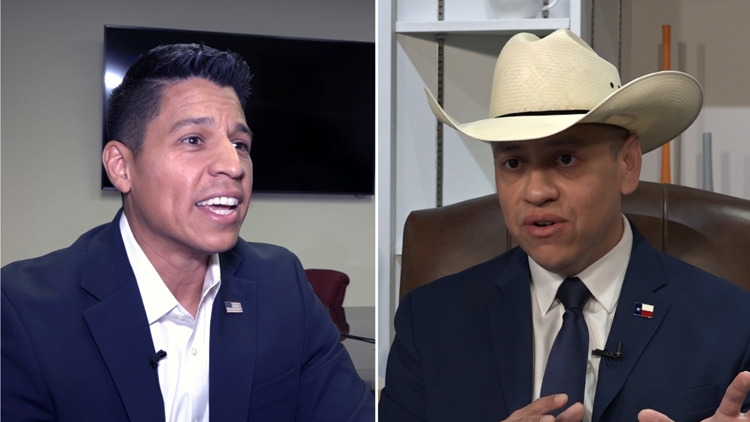
As the sun sets over the sprawling landscape of House District 35, two candidates stand poised to reshape the future of their community. Carlos De La Cruz and Johnny Garcia, both vying for the congressional seat, have taken on the critical issue of affordability in a district that has undergone significant demographic changes. With the rising cost of living weighing heavily on the minds of constituents, the candidates are ready to present their visions for a more economically accessible future.
In recent years, House District 35 has transformed from a bustling urban enclave into a more rural area that increasingly leans Republican. This shift has brought unique challenges, particularly in terms of affordability. According to a report from the U.S. Census Bureau, the median household income in the district has stagnated, while housing prices have surged by over 15% in the last year alone. This disparity has left many families struggling to make ends meet.
Both Carlos De La Cruz and Johnny Garcia recognize the urgent need to address the cost of living, which has become a pressing concern for residents. The candidates agree that a comprehensive approach is necessary to alleviate financial burdens on families.
“Affordability is not just a buzzword; it’s a reality for many families in our district,” De La Cruz stated during a recent town hall meeting. “We need to focus on policies that directly impact the wallets of our constituents.”
Carlos De La Cruz, a former city council member, has outlined a multi-faceted strategy aimed at tackling the cost of living. His plan includes advocating for increased funding for affordable housing projects and pushing for tax incentives for developers who prioritize low-income housing. “If we can create more affordable housing options, we can help families stay in the neighborhoods they love,” he emphasized.
Additionally, De La Cruz aims to enhance public transportation options, which he believes will help lower commuting costs for families. By investing in infrastructure improvements, he hopes to make it easier for residents to access job opportunities without the burden of high transportation expenses.
His commitment to economic growth is further reflected in his support for small businesses. By implementing grants and support programs for local entrepreneurs, De La Cruz believes he can foster a thriving economy that benefits everyone. “Small businesses are the backbone of our community; when they succeed, we all succeed,” he stated.
De La Cruz's strategy also includes forming partnerships with local organizations and nonprofits that focus on economic development. For instance, he plans to collaborate with the San Antonio Housing Authority to streamline the process of developing affordable housing units. “It’s about bringing everyone to the table,” he noted. “We need a united front to tackle these issues effectively.”
On the other hand, Johnny Garcia brings a different perspective to the table. A community activist, Garcia emphasizes the need for immediate relief for families facing financial hardships. His approach focuses on direct assistance programs, such as expanding access to food assistance and utility subsidies for low-income households.
“We need to ensure that families can put food on the table and keep the lights on,” Garcia argues. He believes that by prioritizing immediate needs, the community can stabilize before tackling long-term solutions.
Garcia also advocates for increasing the minimum wage to ensure that working families can afford basic necessities. He cites studies from the U.S. Department of Labor that show a direct correlation between higher wages and reduced poverty rates. “No one should have to choose between paying rent and buying groceries,” he asserts.
Garcia's campaign is heavily focused on grassroots mobilization. He has organized community workshops where residents can learn about their rights as workers and how to access available resources. “Empowering our community is crucial,” he stated. “When we know our rights and resources, we can fight for what we deserve.”
The residents of House District 35 are eager for solutions. Many families have expressed their concerns regarding the rising cost of living and the challenges they face in making ends meet. Local resident Maria Lopez shared her struggles: “Every month is a challenge. I work hard, but the bills just keep piling up.”
Community forums have become a platform for residents to voice their opinions and ask the candidates about their plans. At a recent event, a father of three asked both candidates how they plan to make housing more affordable. “We need real solutions, not just promises,” he said, echoing the sentiments of many in attendance.
Both candidates have taken these concerns to heart, promising to prioritize the voices of constituents in their decision-making processes. “I am committed to listening to the community and ensuring that their needs are met,” Garcia stated in response to the father’s question.
The stories from community members extend beyond financial struggles. Many families have shared tales of resilience and hope. For example, local teacher Ana Martinez spoke about how she balances her job with raising two children on a tight budget. “It’s not just about surviving; it’s about thriving,” she said. “I want my kids to have opportunities, but it’s hard when every penny counts.”
While both candidates present compelling visions for addressing the cost of living, they also face significant challenges. The political landscape in House District 35 has shifted, with a growing Republican influence that may complicate efforts to implement progressive policies. De La Cruz and Garcia must navigate this terrain carefully to garner support from diverse constituents.
Moreover, funding for affordable housing and assistance programs often relies on federal and state budgets, which can be unpredictable. De La Cruz acknowledges this reality: “We need to be strategic in our approach and work collaboratively with various stakeholders to secure funding.”
Garcia adds that community engagement is crucial in overcoming these hurdles. “We need to mobilize our community to advocate for the resources we need,” he emphasizes. “Together, we can make a difference.”
Both candidates have also expressed the importance of engaging with local leaders and organizations that have a deep understanding of the community's needs. By forming alliances with established groups, they hope to leverage existing resources and networks to maximize their impact. “We can’t do this alone,” De La Cruz noted. “It’s about building a coalition of support.”
As the election approaches, both Carlos De La Cruz and Johnny Garcia are focused on their campaigns, eager to connect with voters and share their visions for a more affordable future. With the cost of living at the forefront of many residents' minds, their proposals will play a critical role in determining the outcome of the election.
The future of House District 35 hinges on the ability of these candidates to address the pressing needs of their constituents. As they continue to engage with the community, it is clear that the path forward will require collaboration, dedication, and a commitment to genuine solutions.
For residents looking to learn more about the candidates and their plans, community forums and town hall meetings are invaluable opportunities to engage directly with the candidates. As they weigh their options, voters are encouraged to consider how each candidate's proposals align with their own experiences and needs.
By Lily Nguyen

By Monica Ramirez
By Lily Nguyen

By Monica Ramirez